The project
A family straw-bale building adventure, meant to last, stay sober, and adapt to reality.
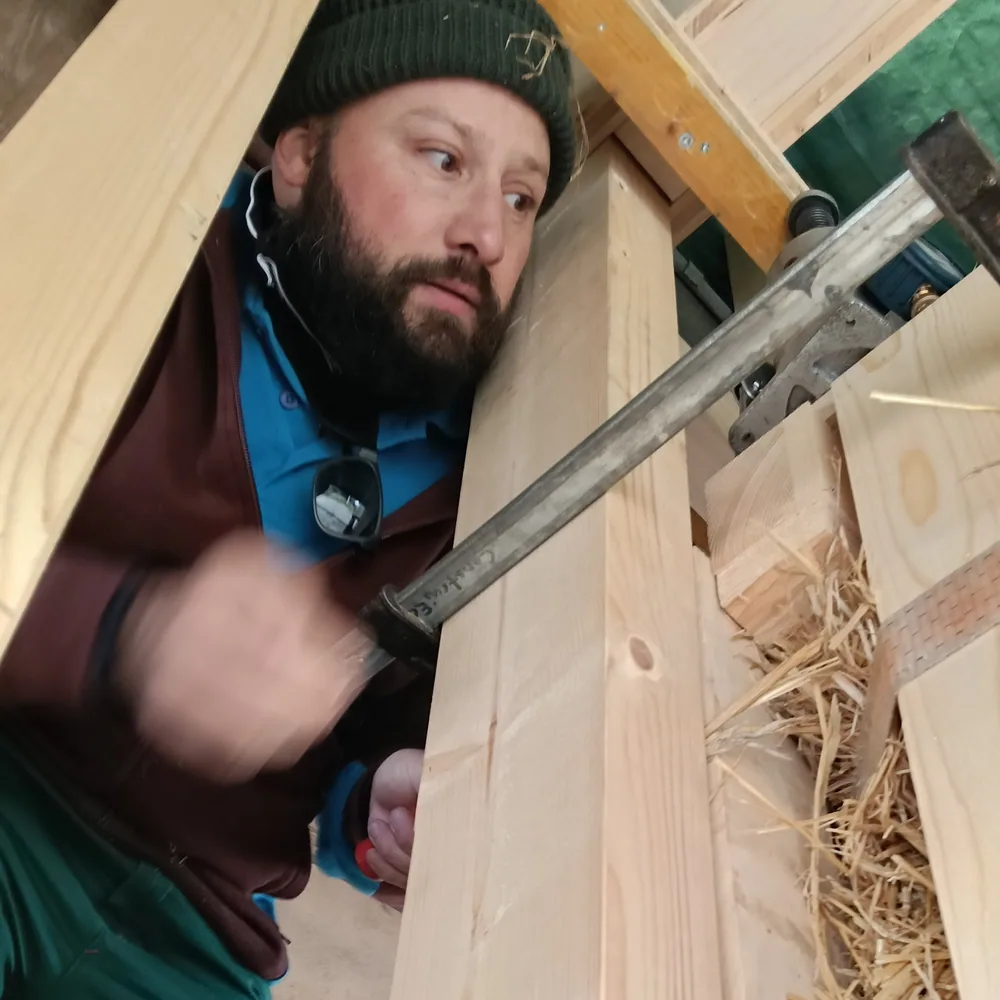
The Béguin family
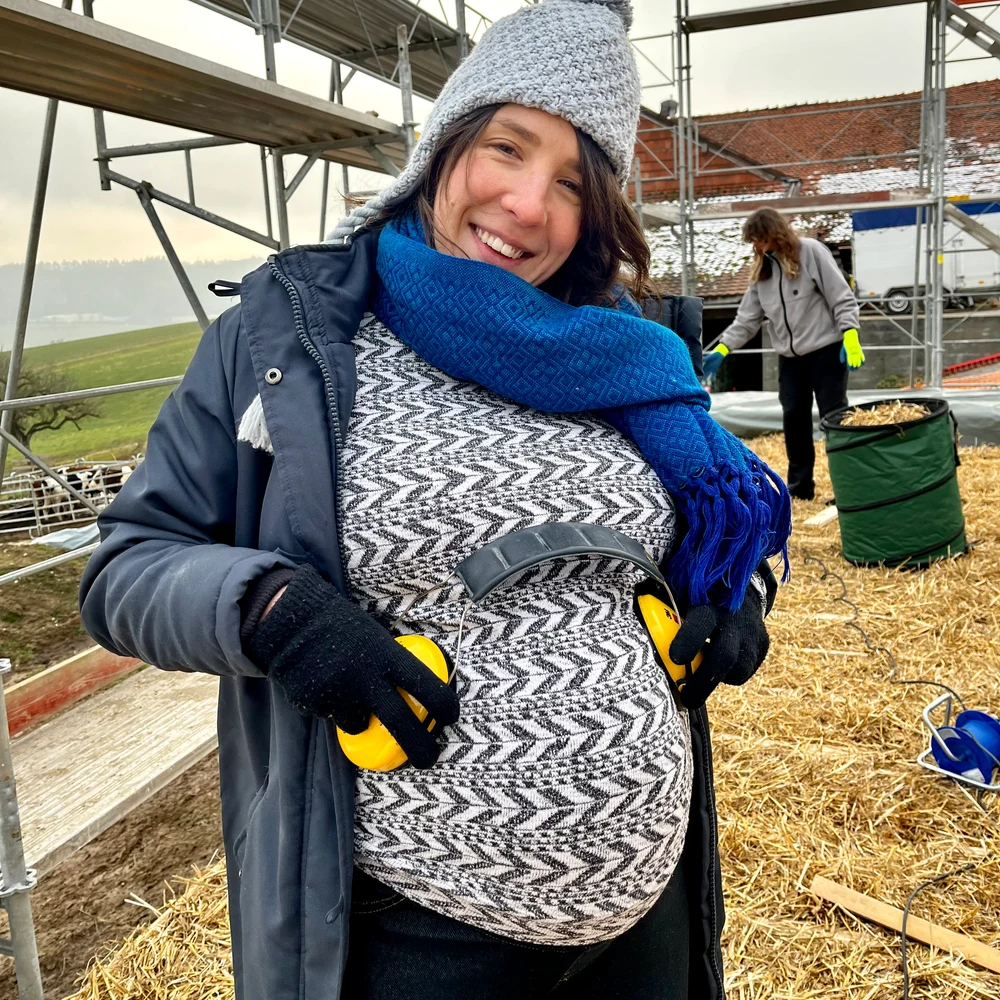
Lise
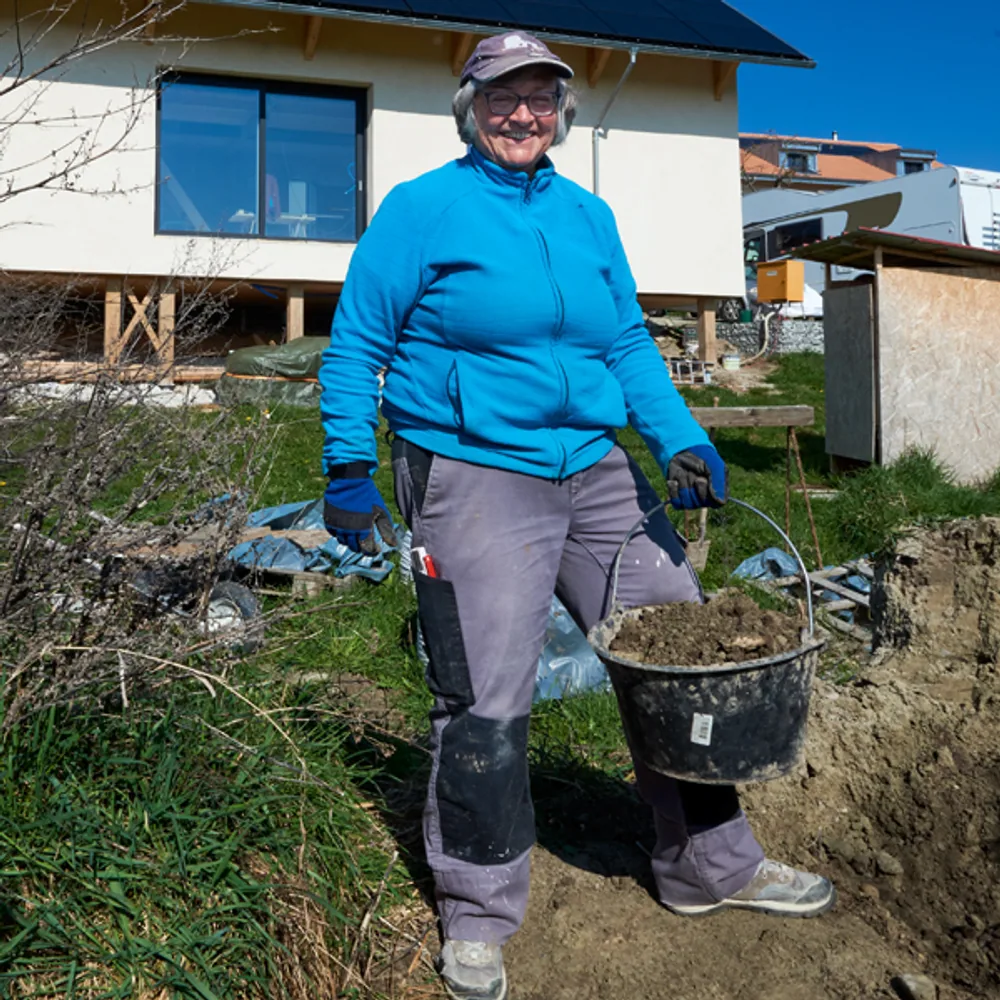
Marie-Catherine
A practical family approach
This project came from a simple wish: live in human-scale homes that use fewer resources and fit harmoniously into their surroundings.
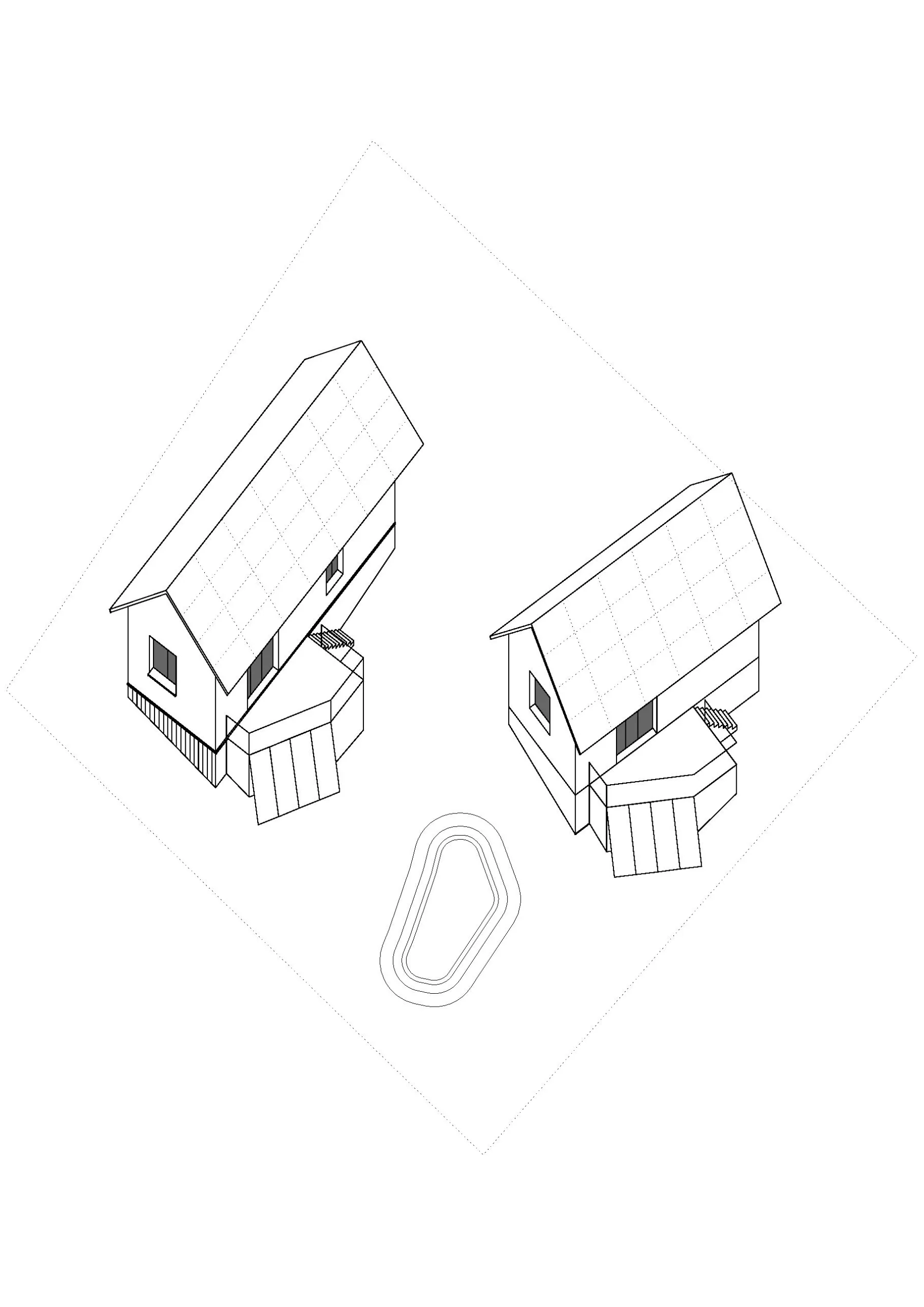
To make the dream financially workable in Switzerland and ensure solid construction, we pooled strengths: Jérôme and Lise on one side, and Marie-Catherine (Jérôme’s mother) on the other. Sharing guarantees allowed two distinct yet connected homes on one plot.
Why straw?
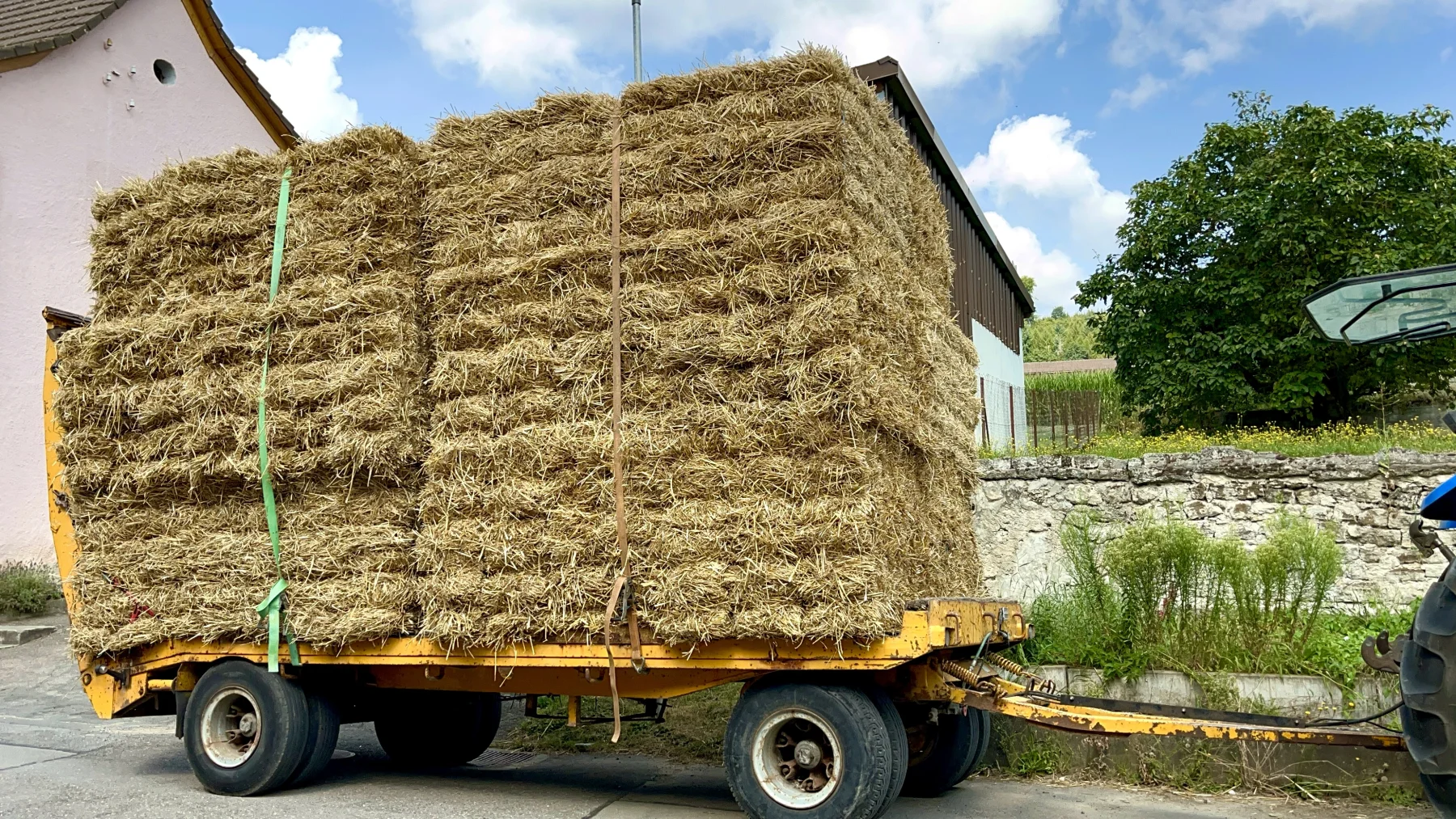
After exploring options from tiny houses to container structures, we chose straw: local, affordable, ecological, with excellent thermal performance without the weight and space limits of mobile housing.
Execution requires discipline to keep the material dry, yet straw remains an ideal breathable insulator that naturally regulates humidity.
Lightweight construction and gentle ground impact
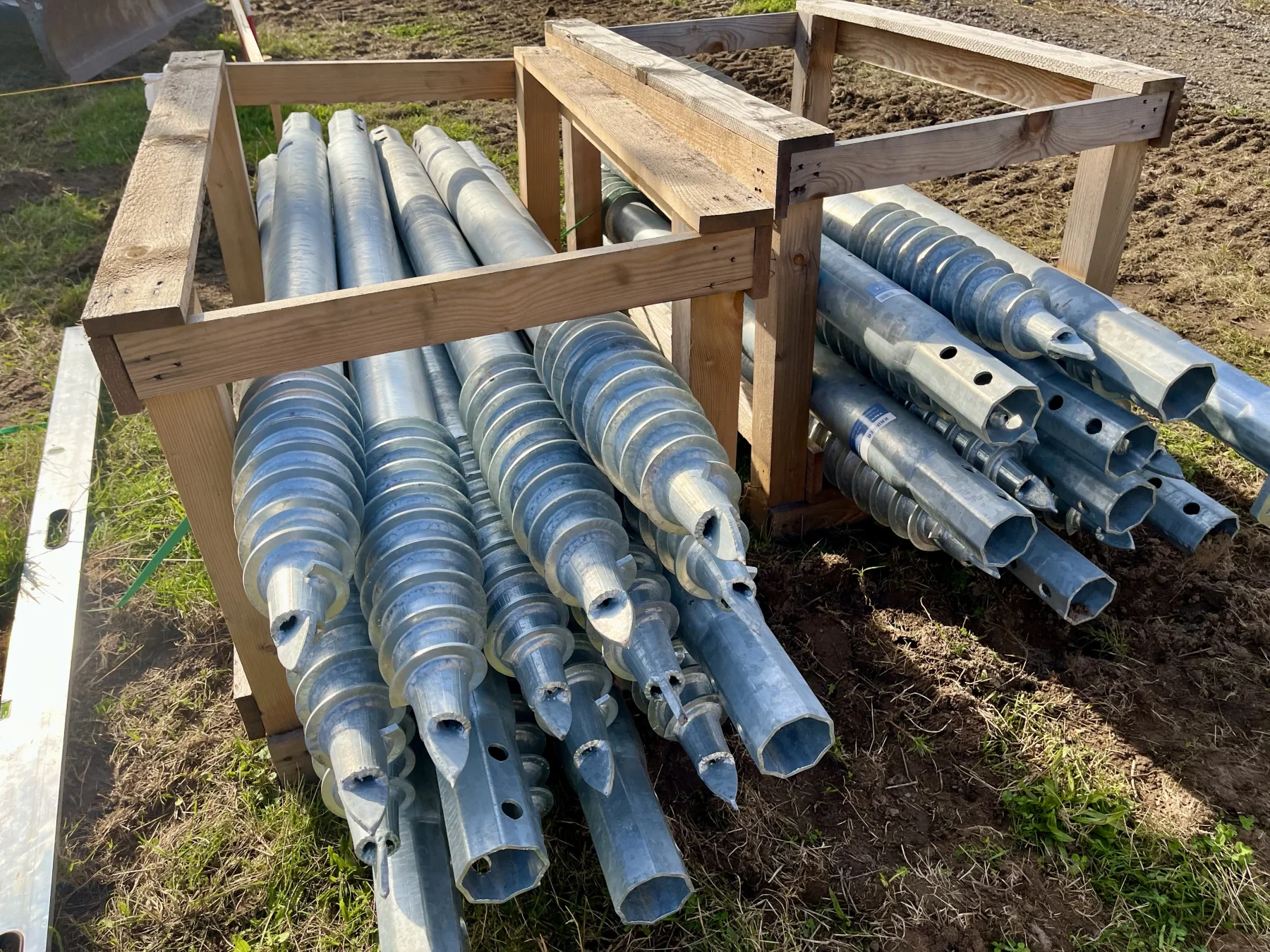
To avoid concrete slab footprint and cost, we chose a raised structure on piles. The house sits on galvanized steel foundation screws (Krinner type) anchored about 3 metres deep.
This limits excavation, preserves soil life, and allows fast, reversible installation.
Towards resilience, without dogma
Our goal is not total off-grid purity, but sensible resilience.
Heating: a self-built solar thermal system (with help from Sebasol) covers roughly 80% of heating and hot water. A hydro stove bridges darker winters—about one stere of wood per year.
Water: each house has a 10 m³ rainwater tank treated by mechanical filtration, activated carbon, and UV sterilisation. Grid connection remains as backup; daily use relies on treated rainwater.
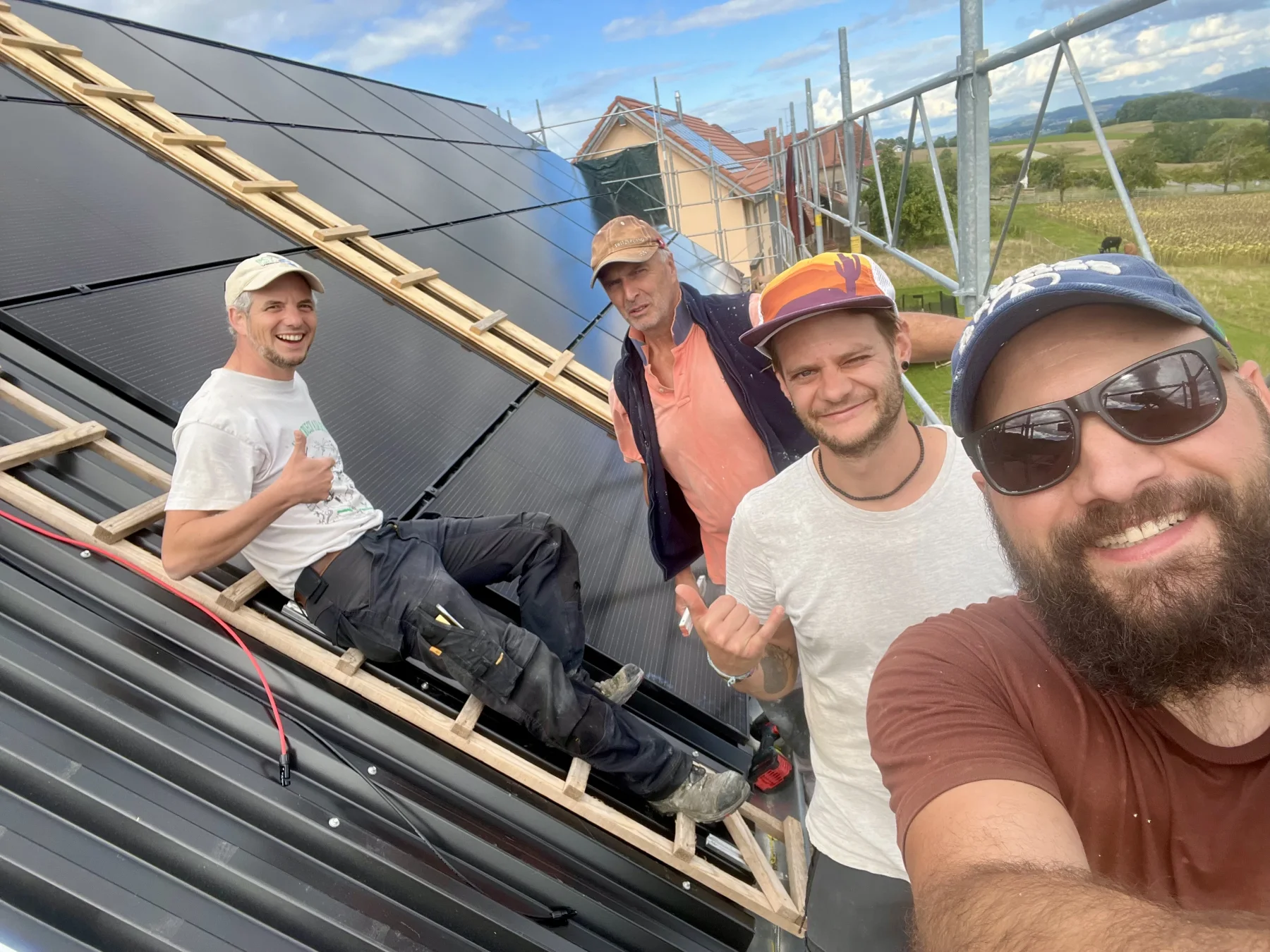
Electricity: the south roof carries PV panels (32 panels, 13 kWp on the larger house). Winter output is lower, but the annual balance is strongly positive.
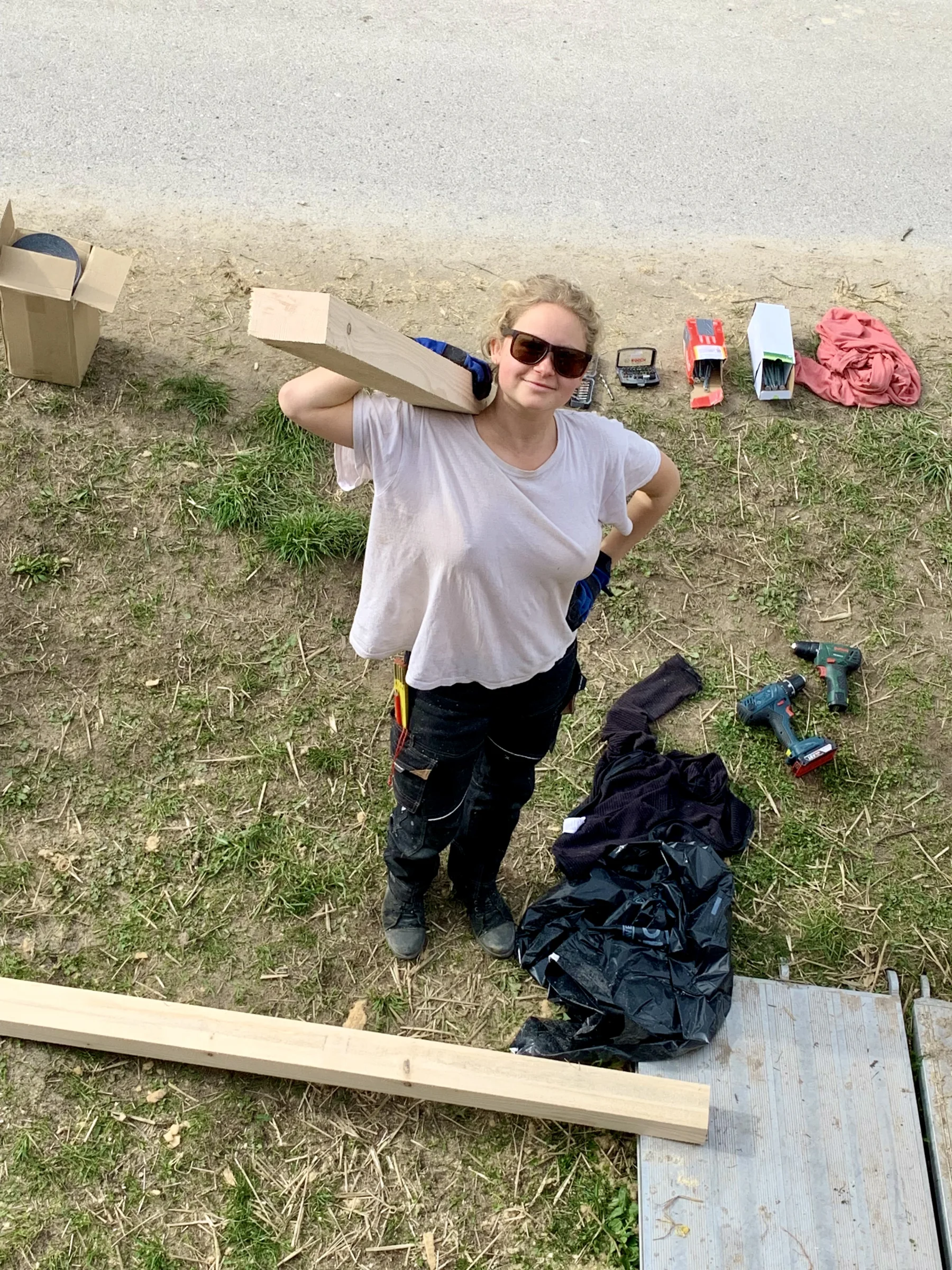
Participatory build with guided expertise
We chose self-build supported by professionals—solid detailing and durability while learning together.
Exterior walls use lime plaster; interiors use raw earth from site excavation (for the cisterns), adjusted with sand to limit cracking.
Because these “living” walls breathe, we currently skip mechanical ventilation and rely on natural air regulation.
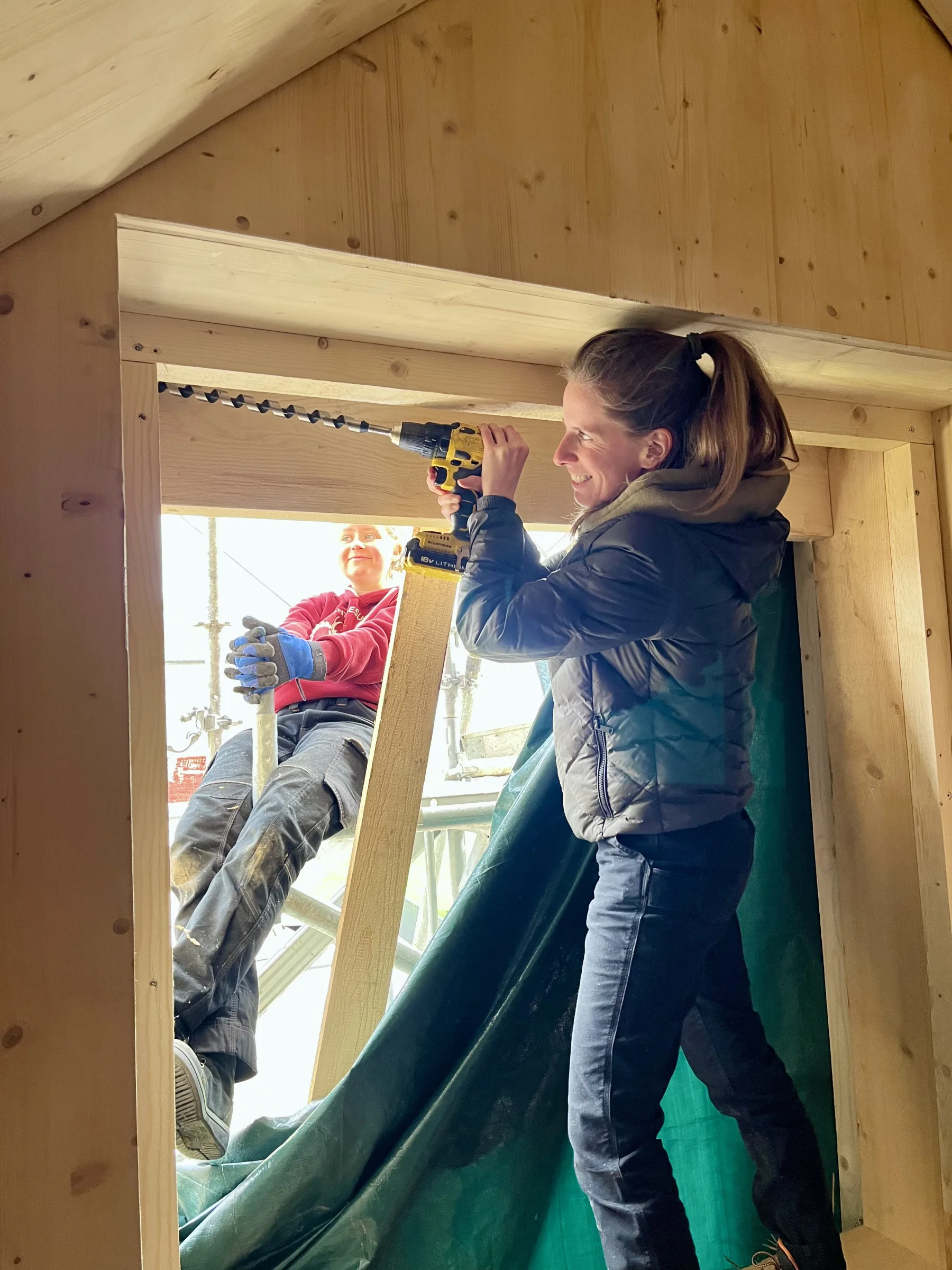
A living project
The site is ongoing: the first house is weathertight and we are fitting interiors.
Straw construction invites collective effort. Curious about techniques or willing to lend a hand? Get in touch—there is always something to do and motivated volunteers are welcome.